I share real-world lessons from building scalable systems at Jump Trading, Binance, and running mission-critical cloud ops at GovTech and Singapore Air Force. No fluff, just practical takeaways, hard-earned fixes, and deep dives that matter.
This command takes your local Ghostty terminal definition and installs it on your remote server, so that when you SSH in using Ghostty, the remote machine knows how to handle it (correct colors, key sequences, etc.) instead of throwing unknown terminal type errors.
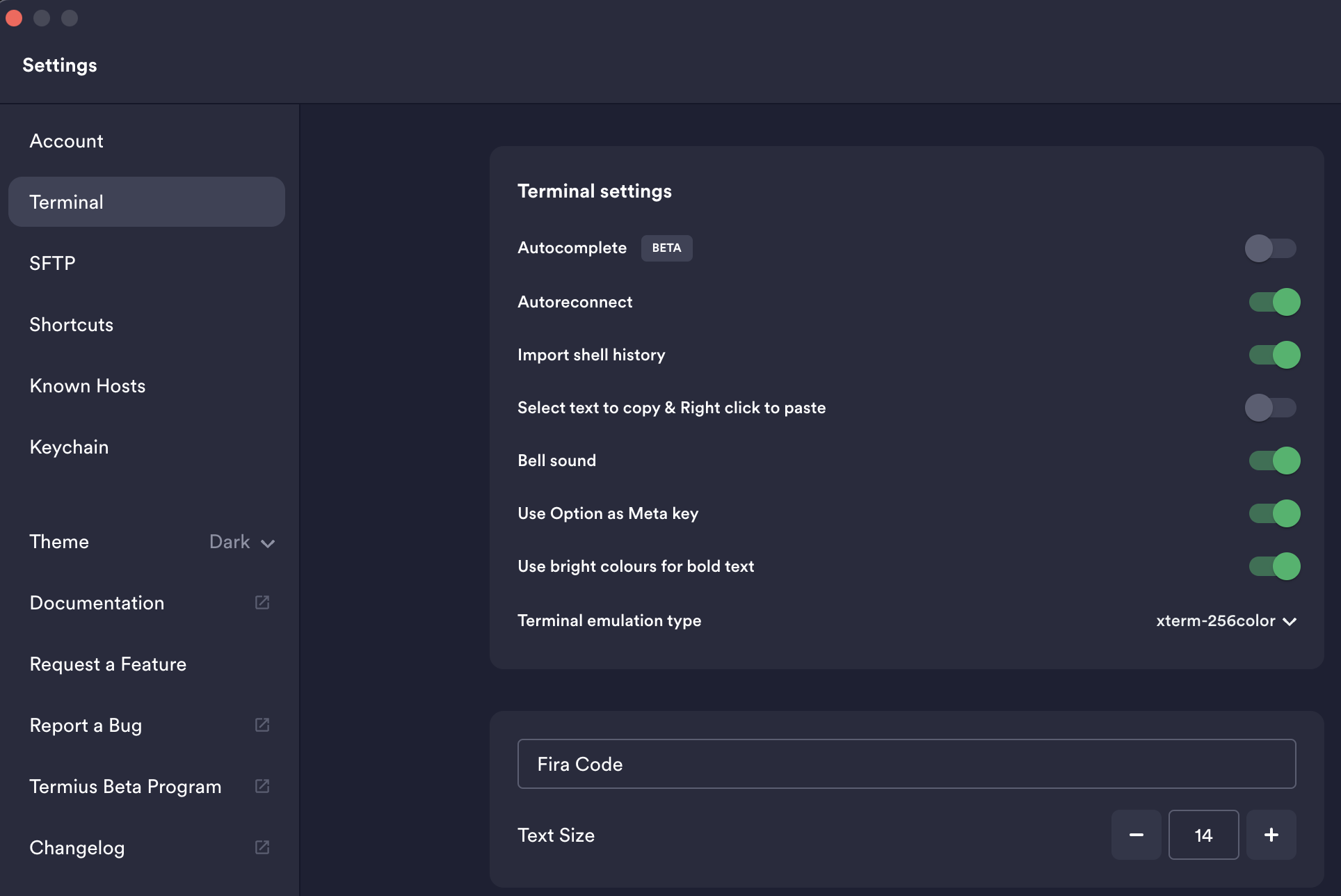
Install Termius as a dmg from the official website instead of the App Store, so you can access your local machine from the Termius app. For more information, view here.
Persistent workflows (survive SSH disconnects and preserve command state like lazygit)
Common Commands
# Create new session (attach if exists)tmux new-session -A -s cs_git# List all sessionstmux ls# Kill a specific sessiontmux kill-session -t mysession# Detach from a session (inside tmux)Ctrl-b d# Reattach to last sessiontmux attach
Zellij
A modern Rust-based multiplexer with built-in layouts and plugin support
Install with cargo install --locked zellij
Common Commands
# Start a new Zellij sessionzellij# Start a named sessionzellij --session mysession# List all sessionszellij list-sessions# Attach to an existing sessionzellij attach mysession# Kill a specific sessionzellij kill-session mysession# Kill all sessionszellij kill-all-sessions
🔑 Inside Zellij (default keybindings):
Ctrl-p → command palette
Alt-n → new tab
Alt-h/j/k/l → move between panes (vim-style)
Alt-[ → enter scroll mode
Ctrl-g → lock mode
Alternatives
GNU Screen – the OG multiplexer, everywhere by default, but feels dated
Byobu – a friendlier wrapper around tmux/Screen, adds status bar and easier bindings
WezTerm – GPU-accelerated terminal emulator with built-in multiplexer mode
abduco + dvtm – minimalist combo, lightweight but niche
Shell
The program that lets you control your OS using text commands
/bin/sh vs /bin/bash
/bin/sh is the POSIX shell - minimal, basic scripting features only. /bin/bash is the Bourne Again Shell - a superset of sh with extras like:
Tab completion
Arrow key history navigation
Bash script syntax like conditionals, {1..10} brace expansion and $() nesting etc.
On Debian, /bin/sh is symlinked to dash, which is even more stripped down than traditional sh. For interactive use, you almost always want bash. You can configure it with sudo chsh -s /bin/bash <username>.
Powerlevel10k is a very customisable theme for ohmyzsh
brew install romkatv/powerlevel10k/powerlevel10kecho "source $(brew --prefix)/share/powerlevel10k/powerlevel10k.zsh-theme" >>~/.zshrczsh # Refresh shell to confiure powerlevel10kp10k configure # Run this to reconfigure
Install ZSH Plugins
All plugins are install under the path that is stored in $ZSH_CUSTOM